Partnering for Change, Engaging the World

ASEAN was established on 8 August 1967 in Bangkok, Thailand, with the signing of the ASEAN Declaration by Indonesia, Malaysia, Philippines, Singapore and Thailand. Since then Brunei Darussalam, Vietnam, Laos, Myanmar and Cambodia joined. The ten Member States of ASEAN continue to push for increased integration and closer economic ties.
‘The Asia Society Philippines hosted the ASEAN 2017 Dialogues precisely to address concerns such as regional security, business opportunities and the harmonization of policies in light of the direction towards integration’, says Washington Sycip, Founding Chairman of the Asia Society Philippines. ‘ASEAN aspires to be a powerful and influential global player – and it can certainly become one. Due to the fact that there is diversity in local cultures, the Asia Society is in an excellent position to help bridge ASEAN economies as they adjust and adapt to a regional mind-set’.
The Philippines is one of the fastest growing economies in ASEAN. With the youngest average population in the region, the country’s future will rely on job creation and inclusive growth as Philippine Chamber of Commerce and Industry President, George T. Barcelon explains:
‘Half a million young people join the workforce every year in the Philippines and we need to focus on helping businesses grow and encouraging job creation. At the Chamber, our mantra is ‘Jobs, jobs, jobs’. We are delivering technical education training across industries focusing on skills mapping.
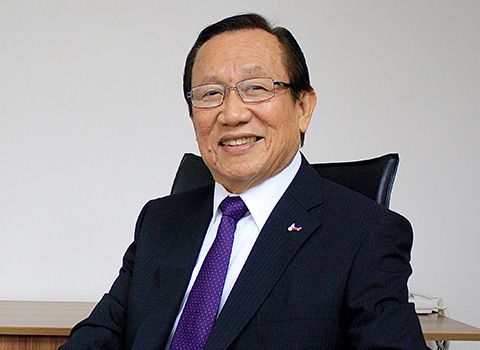
George T. Barcelon, President Philippine Chamber of Commerce and Industry
Since launching the ASEAN 2017 Chairmanship in the Philippines last January, the government has played a key role in reaching out to the region.
‘We have actively promoted the Philippines as a place in which to do business and as a leading investment and tourism destination’, says Atty. Noel George P. Puyat of the Presidential Communications Operations Office. ‘For ASEAN in 2017, the fiftieth anniversary of the Association is a key milestone as we steer the region forward and in the Philippines, we are easing visa restrictions and improving our trade figures across industries with our neighbouring countries. The current Administration recognizes the challenges being faced by the Philippines and is actively addressing the country’s economic and security needs while strengthening relations with our ASEAN neighbours.

Washington Sycip, Founding Chairman Asia Society Philippines
According to Atty Karen Jimeno, Undersecretary for Legal Affairs and Priority Projects Department of Public Works and Highways infrastructure plans are already in place to move the economy and the people in the right direction.
‘The Department of Public Works and Highways (DPWH) has formulated a Traffic Decongestion Program with a proposed fund of P160 Billion for 2018 to build more roads, bridges, and highways. The Department of Transportation is going to build mass transport systems such as railways, bus rapid transport systems and a Mega Manila subway. Following the Philippine Development Plan 2017-2022, one of the country’s main thrusts is to accelerate infrastructure development. The Philippine government recognizes the essential role of private sector in nation building. The government supports private sector participation in infrastructure development through public-private partnership (PPP) projects. The government is also taking initiatives to increase foreign investments. Some initiatives include re-examining policies which limit foreign equity in certain industries. Government policies and processes are also being reformed to increase the ease of doing business in the Philippines’.
The future of the Philippines is strongly connected to those of other ASEAN member countries. The country must strengthen its domestic economy while entering closer dialogues on trade, investment and peace with its friends across the waters.
www.asiasociety.org/philippines
www.philippinechamber.com
www.dpwh.gov.ph
www.asean.org